Introduction
Even the best desiccant can fail if the packaging material is wrong.
We’ve seen it happen many times: the desiccant itself meets spec, but dust escapes, bags tear during transit, or liquid leakage damages the product. The root cause is usually not the desiccant, it’s the wrapper.
In most cases, the decision comes down to two options, standard non-woven and Tyvek. Both are white, lightweight, and breathable. But in real-world use, their performance, risk profile, and cost are very different.
This guide breaks down the practical differences between non-woven and Tyvek desiccant bags—so you can choose the right solution with confidence.
Material Deep Dive: What is the Difference?
Confusion often starts because both materials are casually called fabrics, but they are engineered in completely different ways.
What is Tyvek?
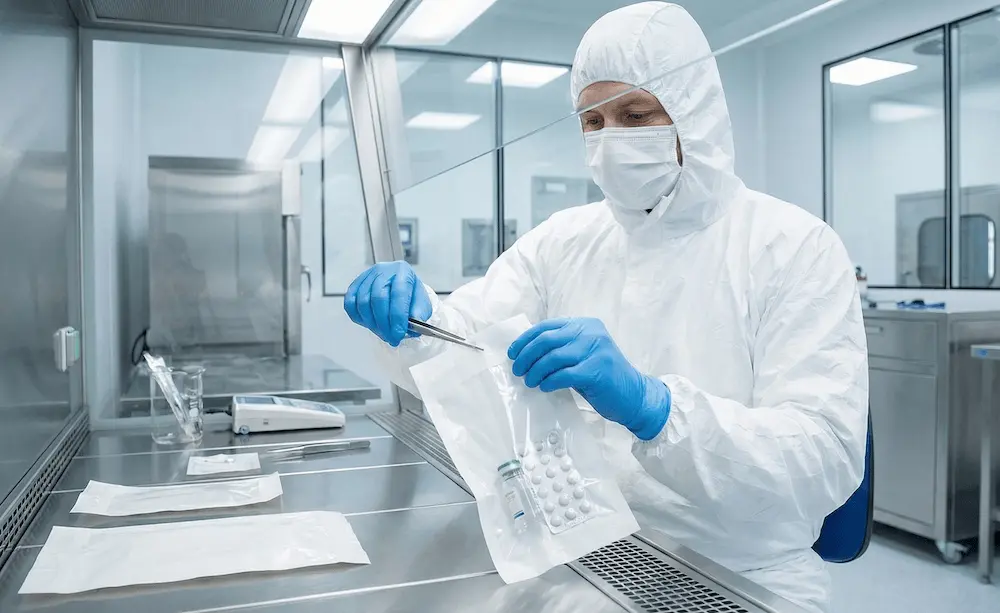
Tyvek® is a registered trademark of DuPont. You’ll commonly see it in medical sterile packaging, cleanroom applications, and protective construction barriers.
It feels like paper, tears like plastic, and behaves like neither. Technically, Tyvek is made from 100% flash-spun high-density polyethylene (HDPE). The fibers are extremely fine and densely bonded. The material is vapor permeable, liquid resistant, lint-free, exceptionally strong, even when wet.
What Is Standard Non-Woven Fabric?
When suppliers refer to “non-woven desiccant bags,” they usually mean spunbond polypropylene (PP). This is a cost-effective, widely used material made by thermally bonding PP fibers into a porous sheet. It offers high breathability, good flexibility and low manufacturing cost.
For many everyday packaging applications, it works perfectly well but it does have limitations.
Performance Comparison: Tyvek vs. Non-Woven
Choosing between Tyvek and Non-Woven isn’t just about price; it is about matching physical properties to your product.
Feature | Standard Non-Woven | Tyvek® | Practical Take |
Cost | Low / Economic | High / Premium | Tyvek typically costs 2–3× more |
Breathability | Very High | Controlled | Faster isn’t always better. |
Dust/Linting | Low, but possible | Zero (Lint-free) | Critical for electronics and pharma. |
Strength | Moderate | Excellent | Tyvek is extremely hard to tear |
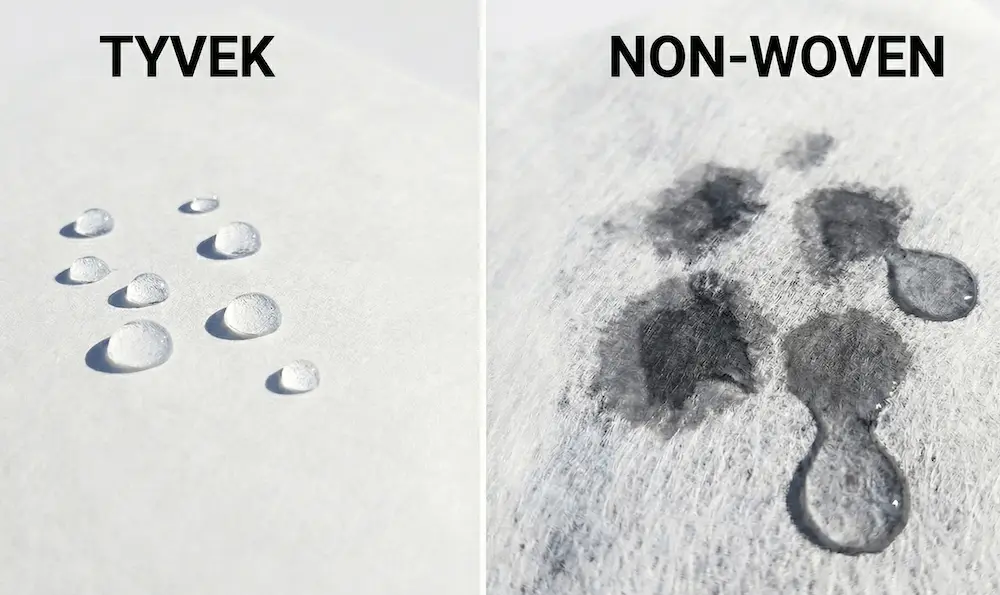
Water Resistance | Porous | Liquid-resistant | Tyvek blocks liquid ingress |
Breathability & MVTR (Moisture Absorption)
Breathability refers to how easily air and moisture pass through the material. In packaging, breathability is measured as MVTR (Moisture Vapor Transmission Rate).
- Non-Woven: Fast Absorption
Non-woven fabric is highly porous. Air and moisture move through it quickly, allowing the desiccant to react fast. It is ideal for environments where humidity spikes quickly and needs immediate reduction.
- Tyvek: Controlled Moisture Transfer
Tyvek is also breathable, in a more controlled way. It allows water vapor to pass while blocking liquid water and particles. It is preferred for long-term storage, as it prevents the desiccant from saturating too early in the supply chain journey.
Seal Strength & Durability
Durability becomes critical once you move beyond small sachets.
- Tyvek is known for its exceptional tear resistance and puncture resistance. It maintains strength even in humid or wet environments. That’s why it’s widely used for container desiccants, where bags may be compressed under pallets or rub against rough surfaces.
- Non-Woven has decent tensile strength, but it is more vulnerable to sharp edges, repeated friction and heavy loads. For 1g–10g sachets inside cartons, bottles, or shoe boxes, this is rarely an issue. For larger industrial bags, it can be.
Dusting & Cleanliness
For industries like pharmaceuticals, food, and precision electronics, dust contamination is a major failure point.
- Tyvek uses surface filtration. Its fibers are so tightly bonded that desiccant dust simply cannot pass through. It is certified lint-free and anti-static treated, making it common and required for pharma, optics, and medical devices.
- Non-Woven relies on depth filtration, trapping particles within the fiber network. This works well for larger silica gel beads. However, with clay or molecular sieves, dust can eventually migrate through the material.
Limitations & Disadvantages
No material is perfect. Understanding the downsides helps avoid costly mistakes.
What are the disadvantages of Tyvek?
Despite its reputation as a premium material, Tyvek has specific constraints that buyers must consider:
Higher Cost
The primary disadvantage is price. Tyvek typically costs significantly, often 2 to 3 times the price, more than standard spunbond non-woven. For low-margin consumer goods (like shoe boxes), this premium is often unnecessary.
Low Heat Resistance
Tyvek begins to soften at approximately 135°C (275°F). It is not suitable for applications involving high-temperature reactivation or sterilization processes that exceed this limit.
Static Charge
Untreated Tyvek can generate static electricity. While anti-static grades are available, standard versions may not be suitable for highly sensitive electronic components without proper treatment.
What are the disadvantages of using nonwoven fabric?
Standard non-woven fabric (Spunbond PP) is cost-effective, but it comes with performance trade-offs:
Dust Leakage
The porous structure of non-woven fabric may allow fine desiccant dust to escape. This makes it unsuitable for cleanrooms or optics.
Liquid Penetration
Standard non-woven is porous. If you are using a desiccant like Calcium Chloride, non-woven fabric will leak, causing severe damage to the cargo.
Lower Puncture Resistance
Standard non-woven materials lack the extreme toughness of flash-spun materials. In heavy-duty industrial applications, sharp metal edges or rough handling can snag and tear the fabric more easily than Tyvek.
Which One Should You Choose?
Now that we have analyzed the technical properties, the real decision comes down to risk vs. value.
When Tyvek Is the Right Choice
You should select Tyvek® if your product is sensitive to dust, requires a sterile environment, or faces strict regulatory compliance.
Pharmaceuticals & medical devices
For products requiring FDA compliance or Cleanroom environment, Tyvek is non-negotiable due to its lint-free nature and resistance to microbial penetration. Grades like Tyvek 1059B or 1073B are industry standards here.
Electronics & optics
Circuit boards, camera lenses, and semiconductors are highly vulnerable to static and particulate contamination. Tyvek’s surface filtration ensures no dust from the desiccant bag itself lands on sensitive sensors.
Food Packaging
For desiccants that come into direct contact with food, the wrapper must be food-grade and tear-resistant to prevent accidental ingestion of beads.
When to Choose Non-Woven
For general consumer goods, standard Non-Woven offers the best balance of performance and price.
Apparel & footwear
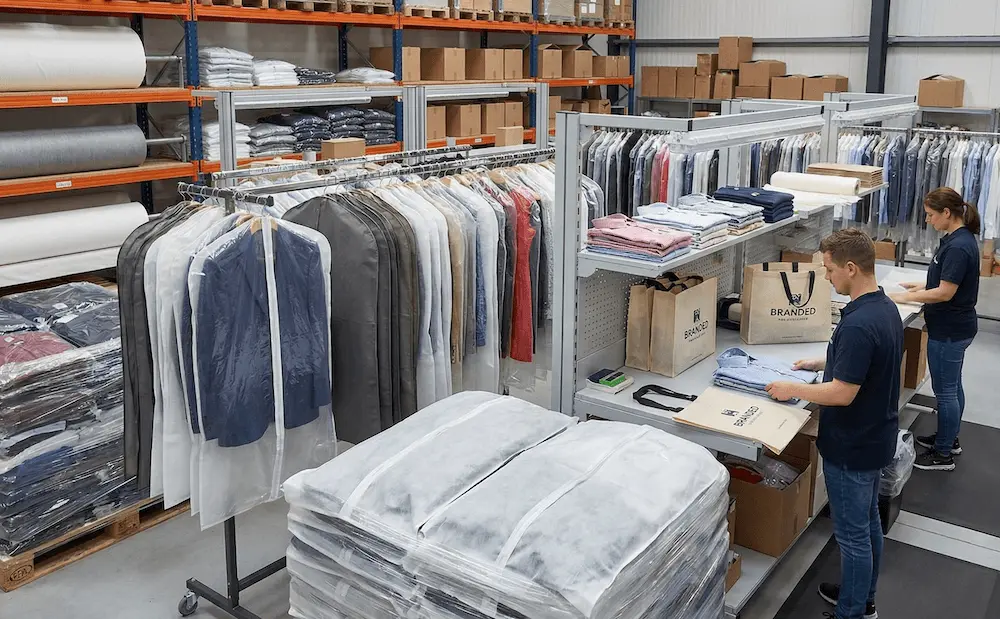
Shoes, leather bags, and garments are not sensitive to microscopic dust. A standard non-woven silica gel packet effectively prevents mold without the premium cost of Tyvek.
Industrial parts & tools
For preventing rust on machine parts or hardware tools, high breathability is key. Non-woven allows for rapid moisture absorption to keep the relative humidity low.
Consumer goods packaging
If the desiccant is placed inside a cardboard box, non-woven is the logical, economic choice.
Matching the Wrapper to the Desiccant Type
Crucially, the type of desiccant inside the bag also dictates which wrapper you must use. Certain desiccants have physical reactions that non-woven fabric cannot handle.
Silica Gel & Montmorillonite Clay
- Recommended Wrapper: Both non-woven and tyvek.
- Why: Silica gel and Clay (Bentonite) remain solid even when saturated. They do not change shape or leak liquid.
- Decision Tip: Use non-woven for cost savings with silica gel. Use Tyvek only if the specific application demands zero dust.
Calcium Chloride
- Recommended Wrapper: Tyvek or specialized composite film ONLY.
- Why: Calcium Chloride is extremely hygroscopic and turns into a liquid brine upon saturation.
- Warning: Standard porous non-woven fabric will allow this liquid to leak out, destroying your cargo. You must use a material like Tyvek or a specialized laminated film that breathes vapor in but locks liquid out.
Molecular Sieve
- Recommended Wrapper: Tyvek or coated paper.
- Why: Molecular sieves act very fast and can generate heat. More importantly, the beads can create fine dust as they rub together. A lint-proof wrapper like Tyvek is preferred to contain this dust.
FAQs on Desiccant Packaging
Is Tyvek breathable?
Yes, but it functions differently than non-woven fabric. Tyvek is vapor permeable, but liquid impermeable. This is its key advantage.
Is Tyvek a fabric?
Not in the traditional sense. It’s flash-spun HDPE with paper-, film-, and fabric-like properties.
Can I use non-woven for food packaging?
Only if it’s certified for food contact and tearing risk is minimal. Tyvek is generally preferred.
Which material is more eco-friendly?
Both Non-Woven and Tyvek are recyclable plastics. Tyvek is made of a single-material structure, and it is often easier to recycle in industrial streams.
Making the Right Choice for Your Product
There is no universal “best” material, only the right material for the job.
Choose standard non-woven if your priority is cost-efficiency, rapid moisture absorption, and general protection for non-sensitive goods like apparel, shoes, and hardware.
Choose Tyvek if your priority is absolute purity, high tear strength, and zero dust contamination for pharmaceuticals, electronics, or food products.
Your desiccant bag is the first line of defense. Saving a few cents on the wrapper can easily cost thousands in damaged inventory.