Moisture damage is a silent margin-killer in B2B logistics. But the traditional solution creates a hidden leak in your procurement budget.
Can industrial silica gel be reliably reused without compromising asset protection?
To answer this, we broke down the thermal regeneration process. We analyzed the exact parameters needed to transform silica gel from a disposable cost into a reusable supply chain asset.
Let’s dive right in.
How Silica Gel Absorbs Moisture
Before you try to dry it out, you need to know how it works. Silica gel doesn’t soak up water like a kitchen sponge. Instead, it holds moisture on its surface through tiny, sub-nanometer pores.
Because it has a massive surface area, water molecules naturally stick to these pores, which keeps the surrounding air dry. But how do you know when it’s time to recharge them?
- Look at the indicator: Many industrial packets contain color-changing beads. They usually shift from orange to green (or blue to pink) when the surrounding humidity hits about 20% to 60%. This color change signals that it might be time for a recharge.
- Weigh the packets: This is the most accurate method. A fully saturated silica gel packet weighs about 30% to 40% more than a dry one. Once you bake the moisture out, the weight will drop back to its original baseline.
3 Steps to Reactivate Silica Gel in an Oven
For most bulk beads and high-temperature metal canisters, an industrial convection oven is your best bet. It provides even heat, which prevents the beads from cracking.
Here is the standard process we use to dry out bulk desiccants:
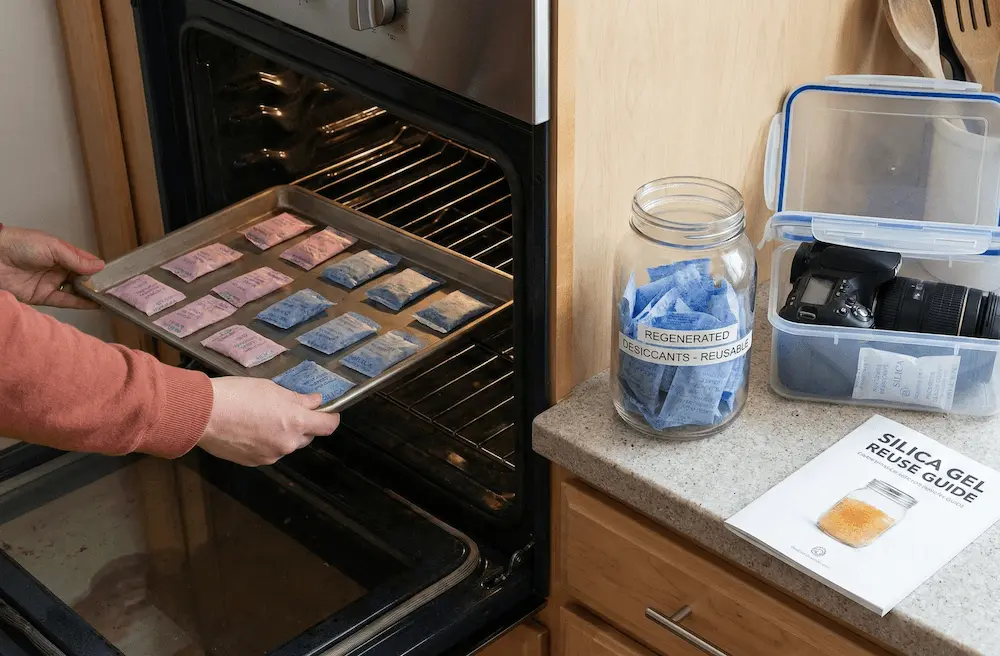
Step 1: Prep your materials. Spread the beads or packets in a single, thin layer on a metal tray. A thin layer ensures maximum airflow, which helps the trapped moisture escape quickly.
Step 2: Set the right temperature. Heat your oven to between 220°F and 240°F (105°C – 115°C). Avoid going hotter than 240°F. If the heat is too high, you might destroy the color-changing indicators or shatter the silica beads.
Step 3: Bake and vent. Leave them in the oven for 1.5 to 3 hours. Make sure your oven is actively venting the air. If the oven is sealed tightly, you’re just steaming the gel, and it will soak that moisture right back up when it cools down.
A Quick Warning About Packet Materials
If you’re dealing with Tyvek or standard plastic packets, do not heat them past 175°F (79°C).
These materials will melt or fall apart at higher temperatures. For plastic packets, you might need to use a lower temperature for a much longer time. Honestly, depending on your labor costs, replacing these might be a better choice than trying to save them. If you need fresh supplies for your packaging lines, you might want to explore the bulk options available on Desiccant Global.
Why You Shouldn't Use a Microwave
We often hear people ask if they can just pop their desiccants in the microwave. We don’t recommend this for industrial or commercial operations.
- Uneven heating: Microwaves heat the water molecules too quickly. This creates steam pressure inside the bead, causing it to explode and turn into useless silica dust.
- Damaged indicators: Hotspots in the microwave can burn the color indicators permanently.
- Fire hazards: Many heavy-duty packets use foil seals or metal staples. These will spark in a microwave and could easily start a fire.
Storing Your Reactivated Desiccants
Once you take the silica gel out of the oven, it’s incredibly thirsty. If you leave it sitting on a warehouse table, it will immediately start pulling moisture out of the air. This completely wastes all the effort you just put into drying it!
As soon as it’s safe to handle, transfer the hot gel directly into an airtight container. We recommend using a heavy-duty plastic bucket with a rubber gasket seal or a metal drum.
Make sure the container is completely clean and free of any oils. Even a tiny bit of oil can clog the pores of the silica gel, permanently ruining its ability to absorb moisture.
When Is It Time to Throw Silica Gel Away?
As we mentioned earlier, you can’t reuse silica gel forever. You should expect peak performance for about 3 to 5 reactivation cycles. After that, the material physically breaks down.
Watch out for these signs that it’s time to replace your stock:
- If your packets are changing color within days instead of weeks, the pores have likely collapsed.
- If the beads look dark brown or black, they are likely contaminated with oils or dirt and won’t work anymore.
- If you see a lot of broken shards or dust at the bottom of your containers, the beads have fractured. This dust can easily damage sensitive electronics.
Safety and Environmental Tips
When handling large volumes of dry silica gel, always protect your team. While it isn’t toxic, breathing in silica dust can irritate your throat and lungs.
We highly recommend wearing an N95 mask and safety glasses when pouring bulk beads. Also, use a vacuum with a HEPA filter to clean up spills instead of sweeping, which just kicks the abrasive dust back into the air.
Reusing your desiccants is a fantastic way to lower your carbon footprint and reduce warehouse waste. Just make sure that when you finally do throw them away, you follow your local disposal regulations, especially if they were exposed to any hazardous chemicals during shipping.
Conclusion
There you have it: a complete, actionable guide to reactivating your silica gel and cutting down your packaging supply costs.
By following these specific temperature controls and avoiding the microwave, you can safely squeeze 3 to 5 lifecycles out of your bulk desiccants.
Now, I’d love to hear from you:
Which type of desiccant are you planning to reactivate first? Are you dealing with bulk beads in metal canisters, or are you trying to salvage Tyvek packets?
If you decide it’s more cost-effective to replace your stock, our brand-new bulk silica gel options might be a great fit. Feel free to contact us!