The most common question I get from clients is simple: “What is your best price?”
But in the B2B world, the answer is rarely simple. I’ve seen two desiccant bags that look identical on the outside carry a massive price difference simply because of what’s happening on the inside.
If you are struggling to understand why your quotes are all over the map, you represent the exact type of client I wrote this guide for. You deserve to know exactly what you are paying for.
Let’s clear this up. Instead of guessing, I want to show you exactly how we calculate costs. Here are the six factors that drive pricing and how you can use them to get a better deal.
6 Factors That Influence Desiccant Bag Price
Desiccant Material
The raw material inside the bag is the single largest component of your unit cost. However, price directly correlates with performance. We generally categorize materials into four distinct tiers based on their absorption capabilities and cost structures:
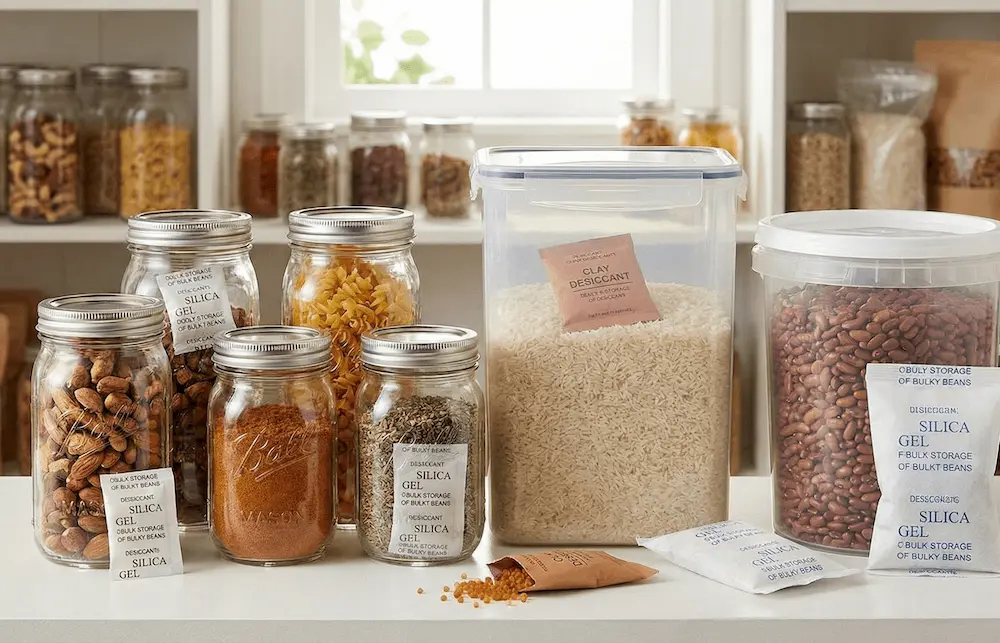
- Clay (Bentonite): Clay is the most economical option on the market. It is highly effective for standard shipping environments and is widely favored for its low cost and environmental sustainability.
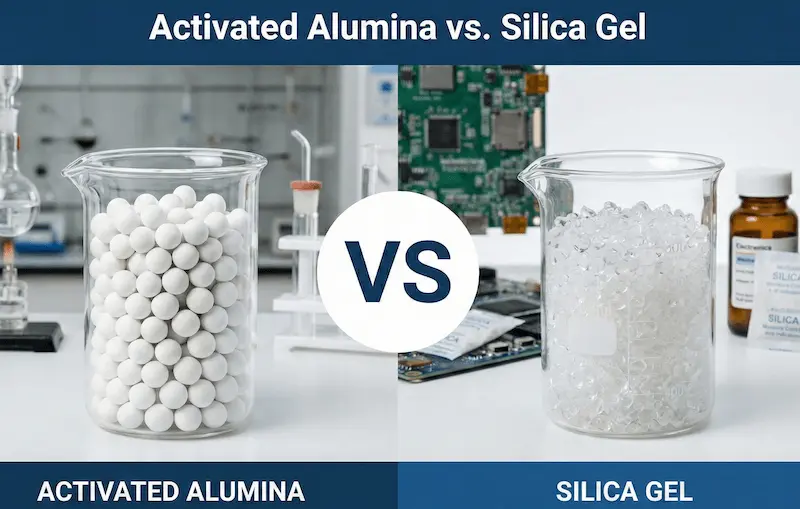
- Silica Gel: Considered the industry standard, it has a mid-range price. It is preferred for its clean appearance, high crush strength, and versatility across industries.
- Calcium Chloride: While this material has a higher unit price, it offers superior performance, absorbing over 200% of its own weight in moisture.
- Molecular Sieve: Premium pricing. This is specialized for aggressive drying at very low humidity levels, such as medical diagnostics or laboratory environments.
Many buyers focus solely on the lowest price per bag, but this often leads to higher total project costs.
Here is the reality: While Clay is cheaper per unit, Calcium Chloride is often cheaper per project. Because of its massive absorption capacity, one bag of Calcium Chloride can often replace 5 to 10 bags of Clay. This means you buy fewer bags, reduce labor time, and significantly lower your freight weight.
Packaging Material
The packaging material is not just a container; it is a filtration system. It dictates durability, breathability and safety. Choosing the wrong packaging can lead to leakage or contamination, regardless of the desiccant quality inside.
Composite Paper / Non-Woven
This is the budget-friendly choice. It breathes well and is cheap. It is ideal for general industrial goods. However, it has lower tear resistance and can release microscopic dust fibers.
Tips: Avoid this material for optical lenses or sensitive electronic circuit boards where particulate contamination is unacceptable.
Tyvek®
The premium standard. While it carries a higher unit cost, it offers specific technical advantages: it is tear-proof, dust-proof, and water-resistant.
Tips: If you are packaging food, pharmaceuticals, or high-end electronics, the cost of Tyvek is a justifiable investment in quality assurance. It is often the only material that meets strict FDA or cleanroom standards.
Hard Shell / Canisters
Commonly found in pharmaceutical applications (like pill bottles), rigid canisters are significantly more expensive to manufacture than flexible sachets.
They are engineered for speed. If your production line uses high-speed automated insertion equipment, rigid canisters are necessary because machines cannot reliably handle or cut flexible bags at high velocity.
Printing & Customization
This is where I see many small businesses accidentally overspend. Moving from “stock” to “custom” introduces fixed costs that drastically change unit pricing for smaller orders.
- Stock (Warning Labels): Manufacturers like us mass-produce millions of bags with standard “DO NOT EAT” warnings in multiple languages (English, Spanish, French, Chinese). This is your cheapest option, zero setup fees.
- Custom Branding: If you want your logo or a specific color match, we have to create printing plates. You will likely pay a one-time plate fee (often $100–$300 per color). Complex prints (3-4 colors) slow down the production line and increase ink costs compared to a simple 1-color black print.
Quantity & Bulk Purchasing
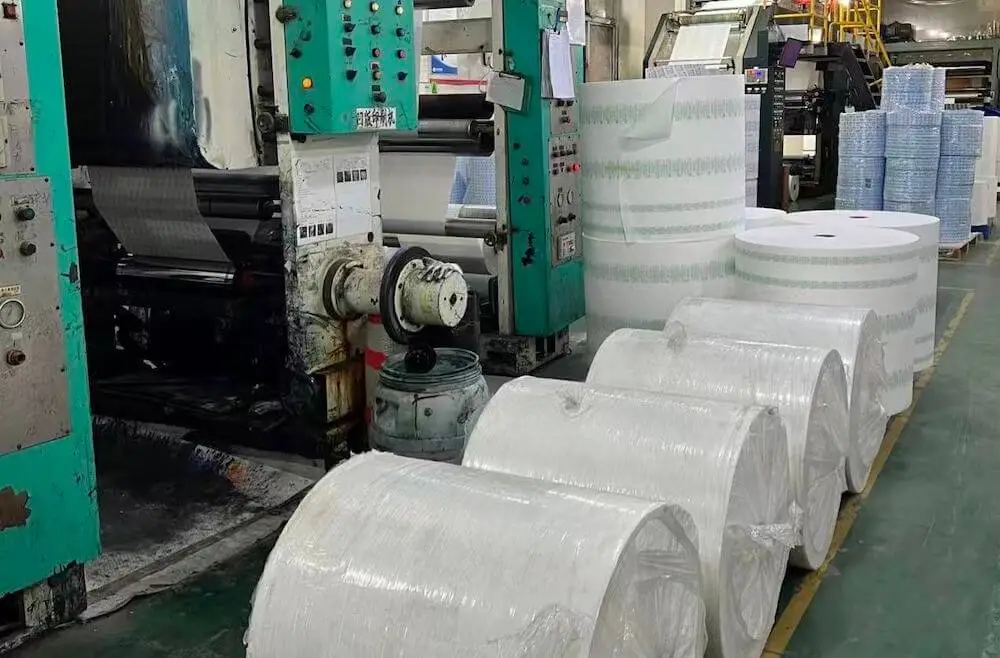
Desiccant manufacturing is a volume game. Our machines run fastest and most efficiently when they don’t have to stop to change rolls.
- Low Volume (<1,000 units): You are likely buying from a distributor, not a manufacturer. You are paying a markup for their warehousing and labor.
- Medium Volume (5k – 20k units): You enter “standard run” territory. Prices drop significantly—often 30-50% lower than distributor pricing.
- High Volume (100k+ units): You hold the leverage. At this level, you can negotiate custom formatting (like getting bags on a continuous spool for automation rather than loose in a box) often without extra fees.
Absorption Capacity & Unit Size
Price scales with weight. A 1kg bag costs more than a 1g bag. However, there is an efficiency hack here.
Pro Tip: Sometimes buying one large 500g bag is cheaper than buying ten 50g bags. You save on the packaging material and the manufacturing time. If your packaging allows for it, consolidate your desiccant into fewer, larger bags.
Certifications & Grade
- Industrial Grade: Perfectly fine for auto parts, textiles, and machinery. It’s the most affordable.
- Food/Pharma Grade: This requires production in a clean room environment with rigorous FDA compliance. This overhead drives up the cost, but it ensures consumer safety.
Why "Cheaper" Is Often More Expensive
I always tell my clients: Do not step over dollars to pick up pennies.
- The Efficiency Ratio: If a cheap clay bag absorbs 20% moisture, but a premium Calcium Chloride bag absorbs 200%, you need 10x the amount of clay to do the same job. The premium bag is actually cheaper per liter of moisture absorbed.
- Freight Weight: Clay is heavy. Switching to lighter, high-absorption desiccants can save you significant money on shipping the desiccants themselves.
- The Cost of Failure: Imagine saving $50 on desiccants, only to have a $50,000 shipment of leather shoes ruined by mold. The “cheapest” desiccant is the one that actually works.
4 Questions to Ask Your Supplier
How much desiccant do I need for a 40ft shipping container?
Want to get the best price immediately? Ask your supplier these four questions during your next RFQ:
1. Can I switch from Silica Gel to Clay?
If you don’t need food-grade or high-speed absorption, this cuts costs instantly.
2. Do you have a standard 'Do Not Eat' print in stock?
Avoids plate fees and custom print upcharges.
3. What is the price break if I double my order?
Buying 6 months’ supply at once usually pushes you into a much lower pricing tier.
4. Is this pricing for loose bags or spools?
Make sure you aren’t paying for spools if you are just throwing them in boxes by hand.
Stop Guessing Your Packaging Costs
Price is just one variable. The right desiccant is the one that protects your product most efficiently.
Need an exact number? Don’t rely on estimates. Request a custom quote today and let our engineers calculate the exact amount of desiccant you need, so you never overpay for protection you don’t use.