You lock the container doors at the factory, and everything looks perfect. But 40 days later, your customer opens the doors to a nightmare: rusted metal, peeling labels, or worst of all, moldy textiles.
This is “Container Rain,” and it’s the silent killer of supply chains.
Having seen thousands of shipments cross the ocean, we know that moisture damage isn’t just about bad luck, it’s about physics. Choosing the right desiccant isn’t just a purchase; it’s an insurance policy. Below is a practical guide to selecting the right moisture protection for your cargo.
Best Types of Desiccants for Shipping Containers
Not all moisture absorbers are created equal. Using the wrong type is the most common mistake we see in logistics.
Quick Comparison: Which Desiccant Fits Your Needs?
Desiccant Type | Absorption Capacity | Best Use Case | Primary Benefit |
Calcium Chloride | 200% – 300% | Shipping Containers | Highest absorption, turns to gel |
Silica Gel | 30% – 40% | Primary Packaging | Dust-free, food safe rapid absorption |
Activated Clay | 50% – 70% | Short transits / Low value items | Cost-effective, eco-friendly. |
Calcium Chloride
If you are shipping a container across the ocean, Calcium Chloride is the only serious contender. Unlike older desiccants, high-purity Calcium Chloride can absorb up to 300% of its own weight in moisture. It aggressively pulls moisture from the air.
High-quality container desiccants mix the calcium chloride with a starch binder. As it absorbs water, it turns into a thick gel. This is critical because it traps the moisture physically, eliminating the risk of liquid water leaking back out onto your goods if the container heats up.
Silica Gel
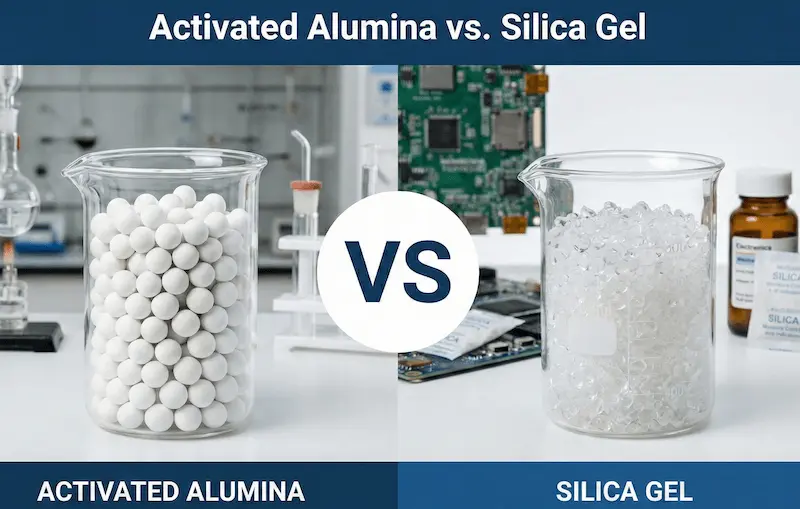
You know these small packets; you find them in shoe boxes and electronics. While excellent for inside a product box, they are poor performers for the open space of a shipping container. They saturate at about 30-40% capacity. To protect a 40ft container with Silica Gel, you would need hundreds of kilograms, which is neither cost-effective nor practical.
Activated Clay (Montmorillonite)
This is a naturally occurring mineral. It is a cost-effective and eco-friendly option, but it has a lower absorption rate compared to Calcium Chloride. We typically only recommend this for shorter voyages or for cargo that isn’t highly sensitive to minor humidity fluctuations.
How Much Desiccant Do You Need?
There is no “one size fits all” answer, but we can give you a solid baseline. The amount depends on three main variables:
Container Size: 20ft, 40ft, or 40ft HQ.
Voyage Duration: Longer time at sea = more temperature cycles = more condensation risk.
Cargo Type: Are you shipping “Hygroscopic” goods? Items like coffee beans, cocoa, wood, and paper release their own moisture during transit, requiring a much higher dosage of desiccant.
General Rule of Thumb
For a standard shipment of non-hygroscopic goods (e.g., machinery, plastics):
- 20ft Container: 6kg – 8kg of Calcium Chloride.
- 40ft / 40ft HQ Container: 10kg – 14kg of Calcium Chloride.
Insider Note: Always err on the side of caution. If your shipment gets delayed at port for two weeks (which happens often), that extra 2kg of desiccant can save a $50,000 cargo. More is always better than less.
How to Use Container Desiccant Bags
Even the best desiccant won’t work if it’s buried at the bottom of a pallet. Moisture moves with airflow, so placement is key.
Placement Strategies
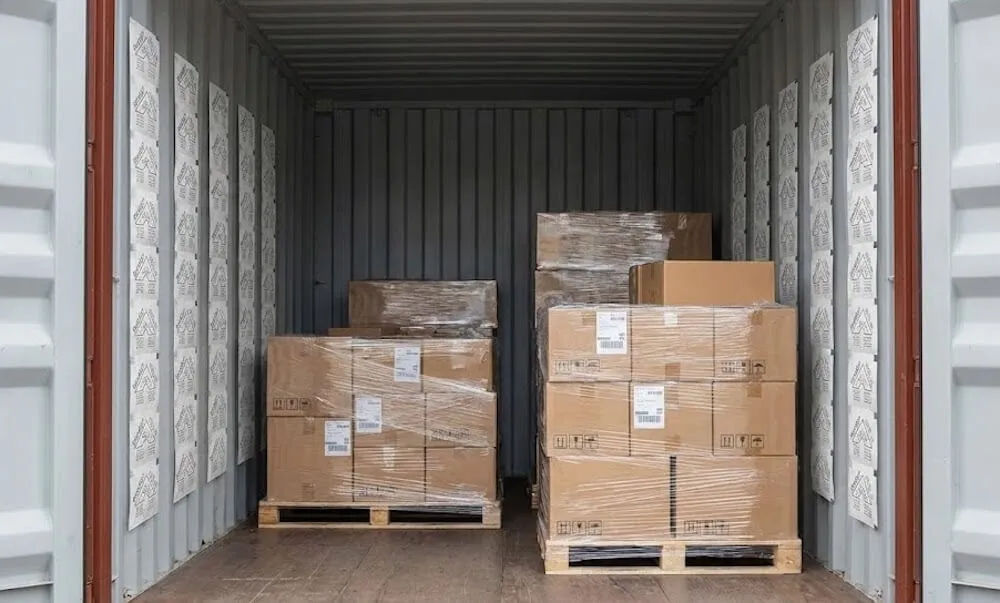
- Hanging (The Best Method): Most container desiccants come with integrated hooks. Hang them from the lashing rings (eyelets) near the ceiling of the container. Moist air rises, and hanging them high maximizes exposure.
- Flat Placement: If you are using blanket style desiccants, lay them flat on top of the cargo. Ensure they aren’t covered by other boxes.
- What to Avoid: Never place desiccants underneath pallets or squeeze them between tightly packed boxes where air cannot circulate. Do not block the intake face of the desiccant bag.
Inspection Before Loading
Before you even load the first box, check the container:
Check the wood moisture content of the floor. If it’s over 20%, request a new container. A wet floor can release gallons of water during the trip.
Close the doors and look for light leaks. If light comes in, moisture comes in.
Key Benefits of Using Moisture Absorbers
Prevent Mold & Mildew: Essential for textiles, leather goods, and food products.
Stop Corrosion: Protects machinery, automotive parts, and canned goods. It prevents the dreaded “rust spotting” or labels peeling off cans.
Brand Reputation: When your goods arrive in pristine condition, you reduce insurance claims and return requests. It proves to your buyer that you care about quality control.
Critical Tips for Shipping Containers
If you only remember three things from this guide, make them these:
1. Tape the Vents
This is the most overlooked step. Most shipping containers have air vents to allow “breathing.” However, when using desiccants, you want a sealed environment.
The Fix: Use high-quality duct tape to seal all air vents before loading. If you leave them open, your desiccant will try to dehumidify the entire ocean outside, saturating instantly.
2. Inspect the Floor
The wooden floor of a container acts like a giant sponge. If the container was washed recently and didn’t dry, that floor could hold over 50 liters of water. Always measure moisture content (keep it below 18%).
3. Stick to Calcium Chloride
Do not let suppliers talk you into using standard Silica Gel packets for the container walls. They simply do not have the capacity to handle the temperature swings of a 40-day ocean voyage.
FAQs on Shipping Container Desiccants
How much desiccant do I need for a 40ft shipping container?
For standard dry goods, use 10–14kg of Calcium Chloride. High-moisture cargoes (like cocoa or wood) typically require a higher dosage.
What is the difference between silica gel and container desiccant?
Silica Gel is low-capacity and best for small, sealed product boxes. Container Desiccants (Calcium Chloride) absorb up to 10x more moisture, making them the only effective choice for large shipping containers.
Can I reuse shipping container desiccants?
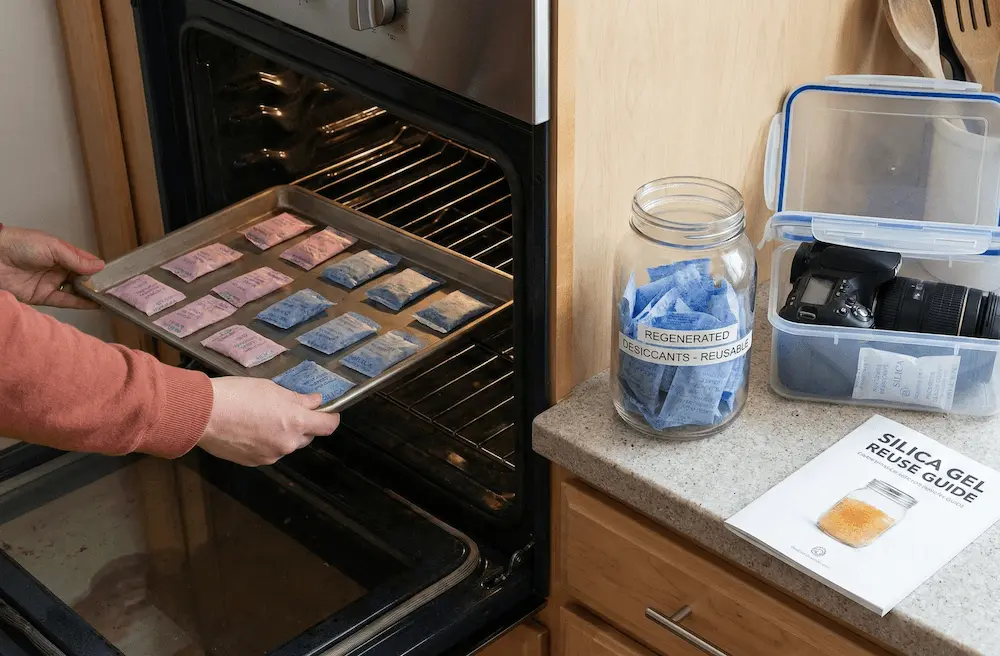
No. Quality container desiccants turn into a gel or liquid to trap moisture permanently. They are designed for single-use and cannot be regenerated.
Why does it rain inside my shipping container?
This is “Container Rain.” It occurs when temperature drops cause moisture in the air to condense on the ceiling and drip down. Desiccants prevent this by lowering the humidity before condensation can form.
Protect Your Cargo with Desiccant Global
Don’t let moisture damage your shipment. At Desiccant Global, we provide industrial-grade moisture solutions tailored to your specific cargo and route.
Not sure how much you need? Contact us today for a free calculation or request a sample kit. Ensure your goods arrive dry and damage-free.