It’s easy to suffer from moisture damage during long sea transits or in warehouse storage.
Just a few weeks of fluctuating temperatures, and your entire shipment of electronics or leather goods could be ruined by mold or rust. Getting this wrong can cost you thousands of dollars in rejected goods and lost trust with your buyers.
But here is a simple, cost-effective way to protect your cargo every time: choosing the right desiccant based on your exact environment.
In short, if you’re dealing with high humidity and large spaces (like shipping containers), you need calcium chloride. If you need to keep a small, sealed package bone-dry (like sensitive electronics), silica gel is your best bet.
Let’s break down exactly why these two materials behave so differently, and how you can pick the right one for your supply chain.
The Science of Moisture Control: Absorption vs. Adsorption
To pick the right material, we need to look at how water molecules interact with each desiccant. The big difference comes down to chemical absorption versus physical adsorption.
Calcium Chloride: Chemical Absorption
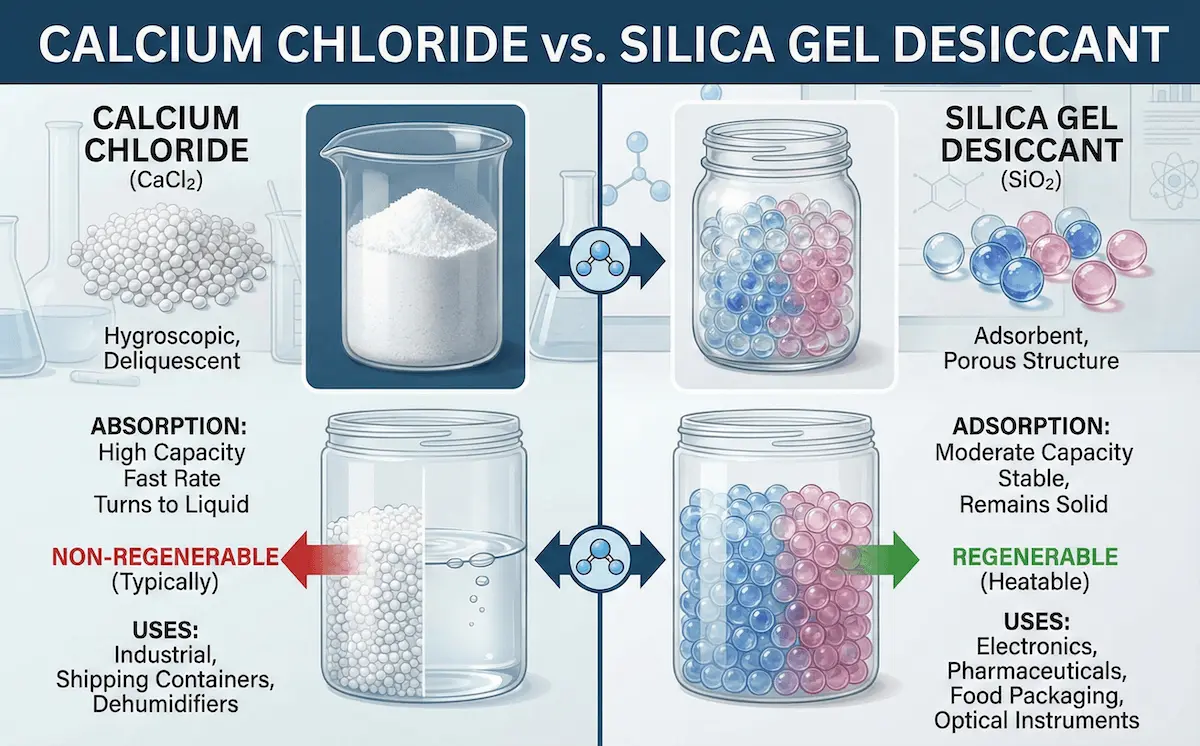
Calcium chloride (CaCl2) controls moisture through a process called deliquescence. This simply means it has a massive appetite for water.
- How it works: The salt crystals chemically bond with water molecules in the air. As it pulls in more moisture, the solid salt dissolves into a liquid brine.
- Why it matters: Because this is a chemical reaction, calcium chloride pulls moisture aggressively. It actively drops the humidity levels inside a sealed space, making it incredibly powerful in damp conditions.
Silica Gel: Physical Adsorption
Silica gel is made of silicon dioxide (SiO2). It features a vast network of microscopic pores that trap moisture.
- How it works: It grabs water molecules and traps them on its surface area. The water is physically held inside the pores, but the silica gel itself doesn’t chemically change.
- Why it matters: Silica gel always remains completely dry to the touch. It doesn’t swell or turn into a liquid, which is crucial if you’re putting it right next to sensitive items.
Performance Comparison: Capacity and Efficiency
When we evaluate desiccants, the main thing we look at is capacity: how much water can it hold compared to its own weight?
This is where calcium chloride and silica gel go their separate ways.
High Humidity Performance (>50% RH)
If you’re shipping goods across the ocean, calcium chloride absolutely dominates.
At 25°C and 70% relative humidity, calcium chloride absorbs way more moisture than silica gel. In our industry experience, calcium chloride can absorb 200% to 300% of its weight. In extreme tropical conditions, we’ve seen it scale up to 600%.
Silica gel, on the other hand, typically maxes out at about 30% to 40% of its weight. Once its pores are full, it stops working entirely, no matter how much water is still in the air.
Low Humidity Performance (<40% RH)
Silica gel shines in dry, sealed environments.
If your goal is to keep a small space near zero humidity, silica gel is incredibly efficient. It snaps up residual moisture quickly to create a perfectly dry microclimate.
Calcium chloride is actually quite slow to react in these bone-dry conditions.
Quick Comparison Chart
Feature | Calcium Chloride | Silica Gel |
Main Mechanism | Chemical Absorption | Physical Adsorption |
Max Capacity | 200% – 300%+ by weight | 30% – 40% by weight |
State When Full | Liquid Brine or Gel | Solid, Dry Granules |
Reaction Speed | Slow start, speeds up in humidity | Fast initial catch |
Ideal Use Cases and Applications
Because of their unique properties, these desiccants are used in completely different industries.
Calcium Chloride: Logistics and Ocean Freight
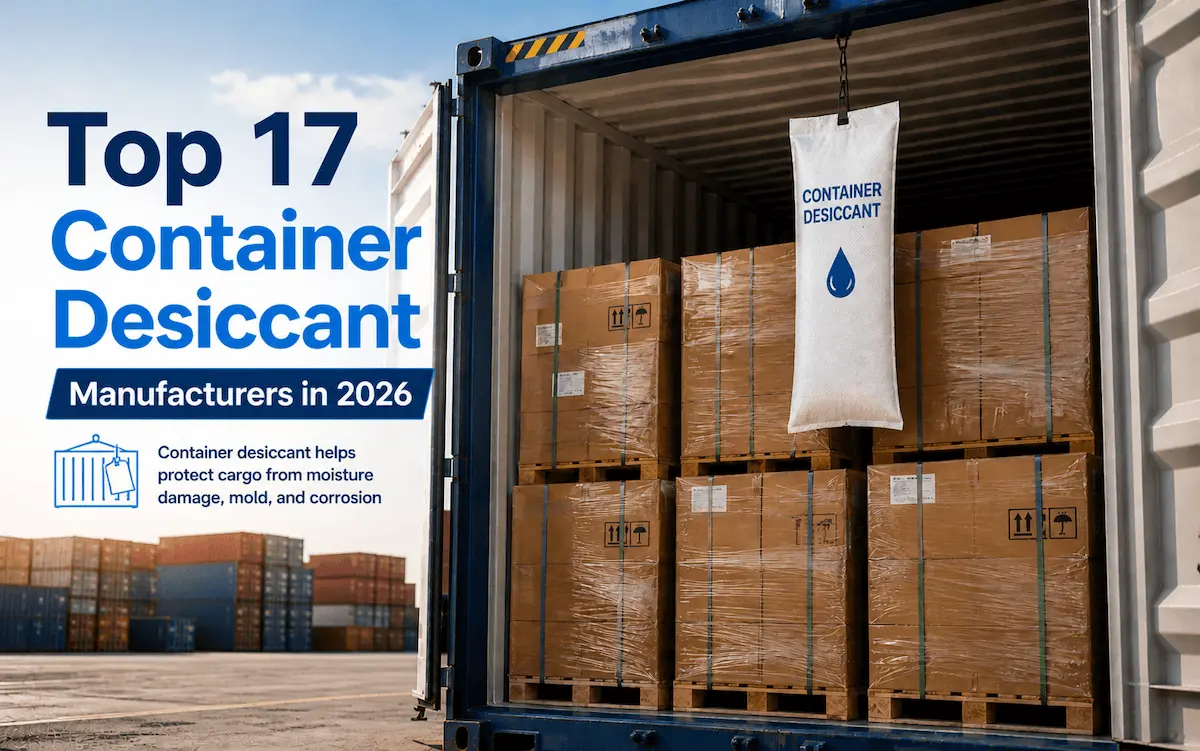
Because of its massive capacity, we highly recommend calcium chloride for shipping containers and logistics.
- Stopping Container Rain: Temperature swings at sea cause condensation on container ceilings, which drips down and ruins cargo. Calcium chloride absorbs liters of water, making it the best defense against container rain.
- Agricultural Goods: Commodities like coffee, cocoa, and rice release their own moisture during transit. Calcium chloride handles this heavy moisture load easily.
Silica Gel: Precision Packaging
Silica gel is the gold standard for protecting electronics, pharmaceuticals, and small retail goods.
- Direct Contact: Because it stays dry, you can toss a silica packet directly into a shoe box or a hard drive case without worrying about liquid leaks.
- Food and Pharma: Food-grade silica gel is non-toxic and inert. It easily meets FDA guidelines for direct food contact packaging.
Operational Risks and Safety
You always want to consider what happens if a desiccant packet fails or gets punctured.
Handling Calcium Chloride
The biggest risk with calcium chloride is the liquid brine it creates. If the packet tears, that salty liquid is highly corrosive. It will instantly rust metal and destroy electronics.
To fix this, high-quality industrial calcium chloride desiccants use a special binding agent. This turns the liquid brine into a thick gel, preventing leaks. If you’re buying for your supply chain, always ensure your supplier uses leak-proof gelling technology.
Handling Silica Gel
Silica gel is generally very safe and stable. However, you should watch out for certain color-changing indicators.
Some blue indicating silica gels use cobalt chloride, which is a known hazard. Most modern manufacturers now use safer “orange to green” indicators. Standard white silica gel is completely non-toxic, though it remains a choking hazard for small children.
Regeneration and Lifecycle Costs
Does it make sense to reuse your desiccants, or should you throw them away?
Can You Reuse Them?
Silica gel is highly reusable. You can regenerate it by baking it at roughly 120°C for an hour or two. This bakes the water right out of the pores without damaging the material. This makes it perfect for long-term storage or equipment breathers.
Calcium chloride is strictly single-use. The chemical reaction turns it into a gel or brine, and trying to reverse that process takes way too much energy. You simply throw it away after your shipment arrives.
Cost Efficiency
Calcium chloride might cost slightly more upfront per packet, but it offers a much better Return on Investment for heavy-duty shipping.
Because it absorbs 10 times more water than silica gel, your cost per gram of water absorbed drops drastically. You would need roughly 10 kg of silica gel to do the exact same job as 1 kg of calcium chloride in a shipping container.
Selection Guide: Which Do You Need?
Still not sure which one fits your needs? Use this simple checklist.
You might want to choose Calcium Chloride if:
- You are dealing with high humidity (over 50% RH) or ocean freight.
- You need to absorb liters of water, not just a few grams.
- You have limited space and need maximum absorption power.
- You are looking for a single-use solution for a transit journey.
You might want to choose Silica Gel if:
- You need to maintain a very dry environment (under 40% RH).
- The desiccant will touch delicate items like circuit boards or food.
- You want a reusable desiccant for long-term storage.
- Your storage environment stays at moderate temperatures.
Conclusion
There you have it, a complete breakdown of calcium chloride versus silica gel.
Now I’d love to hear from you.
Which desiccant do you think might be the best fit for your next shipment? Are you leaning toward calcium chloride to stop container rain, or silica gel to protect your sensitive electronics?
Figuring out the exact absorption capacity your packaging needs can still be a bit tricky.
If you’re not 100% sure how many grams or poles to use for your specific cargo, just drop us a quick message.
Simply tell us what you’re shipping and your destination port, and we’ll gladly help you run the math.