It’s incredibly easy to ruin an entire shipment just by tossing the wrong little packet into your packaging.
Imagine spending months perfecting your premium beef jerky or sourcing high-end electronics, only to have them arrive moldy or rusted. Using a desiccant when you actually needed an oxygen absorber, or vice versa, is a tiny operational mistake that can cost you thousands of dollars in rejected goods and ruined brand trust.
You need to know exactly which enemy you are fighting before you seal your product.
Here is a simple, practical guide to understanding the technical differences between oxygen absorbers and desiccants, so you can protect your cargo and lock in your shelf life every single time.
Core Technical Differences
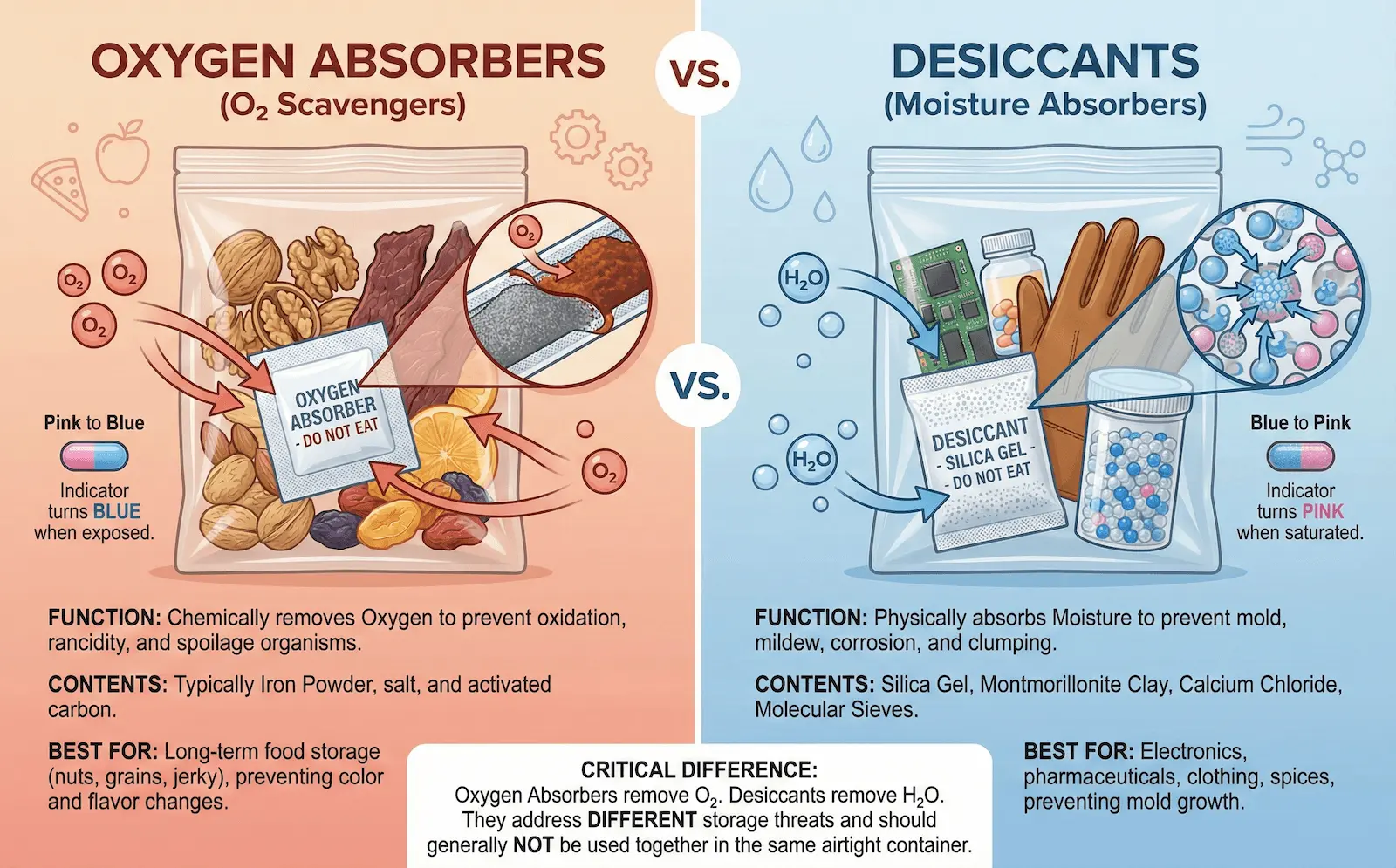
The main difference is simple: oxygen absorbers use a chemical reaction to permanently remove oxygen, while desiccants act like a physical sponge to trap moisture. You need to know which enemy you are fighting before you choose your weapon.
How Oxygen Absorbers Work
They are chemical scavengers. Most of them rely on a simple rusting process. Inside the packet, you’ll usually find iron powder, salts, and clay.
When you expose these to oxygen and a little bit of moisture, the iron starts to rust. This reaction permanently turns the oxygen gas into solid iron oxide.
Why does this matter? Because it’s a one-way street. Once the oxygen is bound, it can’t escape back into your packaging. Standard iron formulations consume about 100cc of oxygen per 2.2 grams of iron.
How Desiccants Work
Desiccants are completely different. They use physical adsorption. If you cut open a packet of silica gel or bentonite clay, you’d see materials full of microscopic pores.
These tiny pores grab onto water vapor molecules from the air. The cool part is that their chemical structure never actually changes.
Because it’s a physical process, it’s often reversible. If you heat silica gel up enough, it releases the trapped moisture right back out into the air.
Operational Constraints You Need to Know
You can’t just throw these packets into any bag and hope for the best. Here is why:
- Iron-based oxygen absorbers actually need a tiny bit of moisture to trigger that rusting process. If your environment is bone-dry (0% humidity), the absorber might just sit there doing nothing.
- We rate oxygen absorbers by the volume of gas they eat (like 100cc or 500cc). We rate desiccants by the weight of water they can comfortably hold.
- Oxygen absorbers demand high-barrier packaging. If your bag breathes, the absorber will just suck in room air until it dies. Desiccants are more forgiving and can work in standard permeable bags.
Application Scenarios: Determining Your Primary Threat
To choose the right packet, you need to look at how your product usually fails. Is it going rancid, or is it getting soggy?
When You Might Want Oxygen Absorbers
You should reach for oxygen absorbers when oxidation is your biggest enemy. This usually happens with high-fat foods or anything prone to mold.
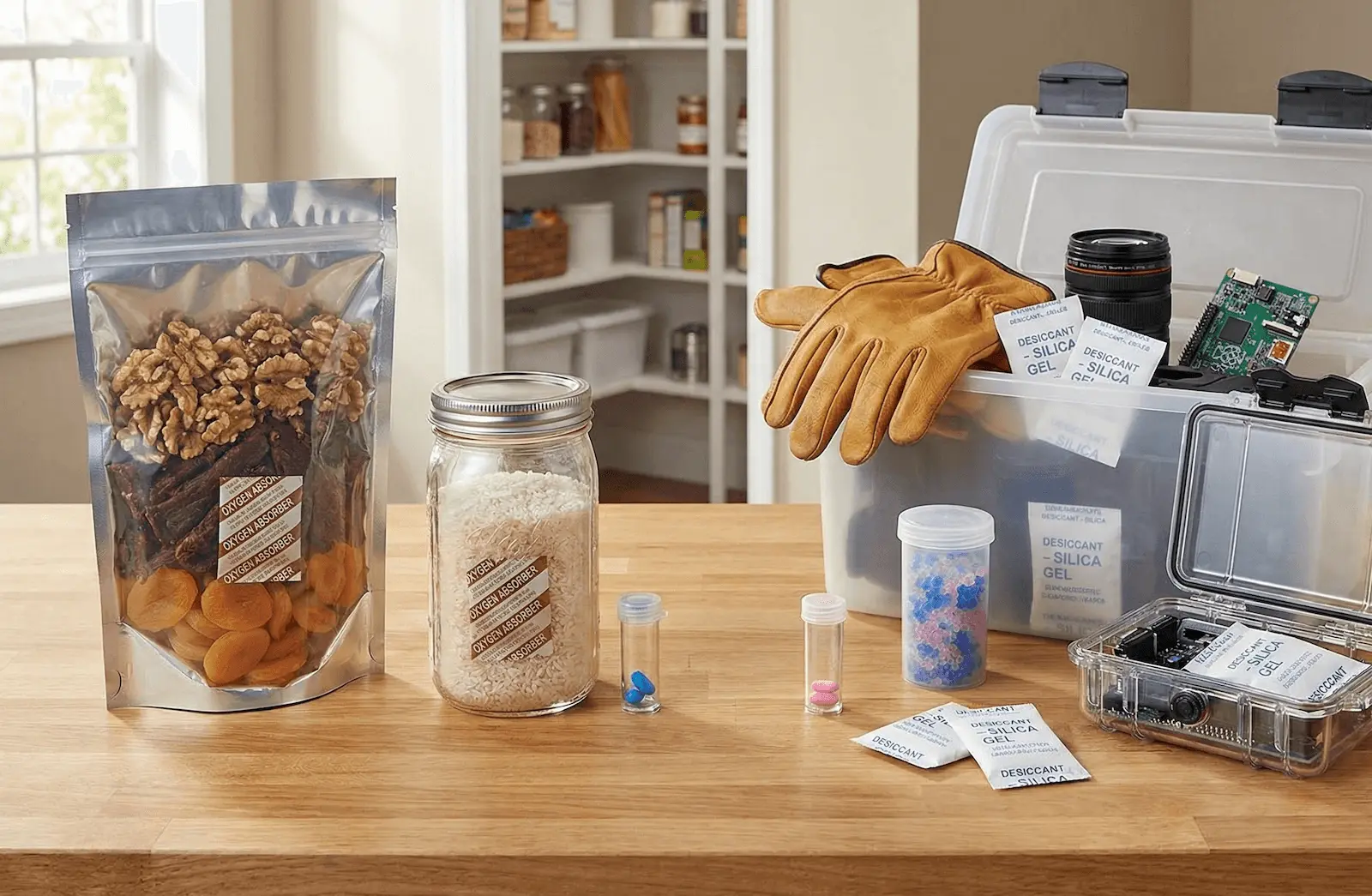
- Lipid-Rich Foods: If you’re packaging nuts, beef jerky, or fried snacks, you need oxygen levels below 0.01%. This stops unsaturated fats from going rancid.
- Aerobic Stability: Does your product grow mold? According to food safety guidelines from the USDA, mold needs oxygen to survive. Cutting the oxygen kills the mold.
- Pharmaceuticals: Some medications break down the second oxygen hits them. An absorber keeps those sensitive compounds stable.
When You Might Want Desiccants
Desiccants might be a good choice when moisture gain ruins your day. Think about powders clumping up or electronics shorting out.
- Hygroscopic Powders: Spices, drink mixes, and flour love to pull water from the air. A desiccant keeps them flowing freely.
- Electronics: Moisture causes corrosion on circuit boards. If you are shipping sensitive tech, silica gel desiccants might be a good choice to prevent moisture damage.
- Crisp Textures: Nobody likes soggy freeze-dried strawberries. A desiccant keeps the crunch alive in humid environments.
Keep an Eye on the Temperature
Temperature completely changes how these packets perform, and I see people forget this all the time.
For oxygen absorbers, the reaction speed roughly doubles every time the temperature goes up by 10°C (18°F). They work faster when it’s warm.
Desiccants do the opposite. As it gets hotter, silica gel gets worse at holding water. If your warehouse hits 100°F, it might even sweat that moisture back onto your product! If you’re shipping through hot climates, molecular sieves might be a safer bet.
Implementing Dual Protection Systems
Sometimes, you have a product that faces a “dual threat.” Probiotic gummies or complex vitamins can go rancid and get moldy.
Using both types of packets is incredibly effective, but you have to engineer it carefully or they will cancel each other out.
The Competition for Moisture
Here is the biggest trap I see: standard oxygen absorbers need moisture to start working. Desiccants are designed to eliminate moisture.
If you put a strong desiccant right next to an oxygen absorber, the desiccant drinks up all the catalyst moisture. Your oxygen absorber becomes completely useless, and your food spoils anyway.
Strategic Placement Tips
To stop them from fighting, you need to separate them physically within the package.
- Drop the desiccant at the bottom of the bag to catch moisture seeping in.
- Stick the oxygen absorber at the top (the headspace) where the oxygen sits.
- You could also look into “self-activating” oxygen absorbers. They have their own internal moisture source, so they don’t care how dry the desiccant makes the air.
Common Engineering Pitfalls to Avoid
Over my time working with active packaging, I’ve seen a few recurring mistakes. Fixing these will save you a lot of headaches.
Undersizing Your Calculations
Many folks calculate packet size by just looking at the empty jar volume. That’s a huge mistake.
You must also account for the air trapped between your food pieces (like the air between almonds). You also need to factor in how much air will leak through your packaging film over the next year.
Stacking Packets Improperly
Don’t stack multiple packets on top of each other. It blocks the surface area they need to breathe.
For oxygen absorbers, stacking is actually dangerous. The rusting process creates heat. If you pile them up, they get incredibly hot and could actually melt your plastic packaging.
Leaving Them Out Too Long
Oxygen absorbers start eating air the second you open the master bag.
If you leave them sitting in a hopper on your packing line for 30 minutes, they’ll be half-dead before they even reach your product. Try to keep exposure under 15 minutes, or invest in an automated dispenser.
Using the Wrong Plastic
Throwing an oxygen absorber into a standard polyethylene (PE) ziplock bag is a complete waste of money.
PE breathes. The absorber will clear the air on day one, but new oxygen will just keep leaking through the plastic. Always pair them with high-barrier films like Mylar or EVOH structures.
The Bottom Line on Active Packaging
Choosing between an oxygen absorber and a desiccant shouldn’t be a guessing game. It all comes down to diagnosing your primary threat.
If your product goes rancid or grows mold, oxygen is your enemy. If your powders clump or your electronics corrode, moisture is the culprit.
Once you identify the threat, pair your chosen packet with the right high-barrier packaging and calculate your sizing carefully. Getting these small engineering details right is what keeps your product fresh and your customers happy.
Now I’d love to hear from you. Are you currently battling moisture issues, or is oxidation your biggest headache right now?