Desiccant manufacturing is the precise engineering of moisture control.
To the average consumer, a desiccant is just a throwaway packet. But to a manufacturer, that packet is the insurance policy protecting thousands of dollars of inventory.
The difference between a desiccant that works and one that fails often comes down to one thing: The Manufacturing Process.
While the concept of moisture absorption is simple, the engineering behind it is not. A slight error in chemical washing can leave corrosive salts in the pores. A calibration issue in the sealing machine can turn a protective agent into a source of contamination.
In this guide, I’m going to show you exactly how high-quality desiccants are engineered.
After reading this guide, you’ll know:
- How we chemically synthesize Silica Gel (and why it’s not plastic).
- Why the washing stage determines if your product is safe or corrosive.
- The critical differences in Clay vs. Silica are processed.
- How we ensure the packet stays sealed under pressure.
Let’s get started!
How Silica Gel is Produced
Many people assume silica gel is a plastic or a natural resin. It is neither. It is a highly porous form of silicon dioxide ($SiO_2$), engineered through a precise chemical reaction.
Gelation (The Reaction)
The process begins in the reactor. We mix Sodium Silicate (water glass) with Sulfuric Acid. This isn’t just mixing fluids; it requires exact temperature and pH control. The result of this reaction is a primary Hydrogel. At this stage, the material is soft and saturated with water—it hasn’t developed its drying powers yet.
Washing
This is the most important step for product safety. When Sodium Silicate reacts with acid, it creates a byproduct: Sodium Sulfate (salt). The hydrogel must go through an intensive washing process to remove these salts.
If a manufacturer cuts corners here to save water or time, residual salts remain in the pores. Over time, these salts can leach out, leading to corrosion on your metal parts or contamination of electronics.
We wash until the conductivity of the water proves the salts are gone.
Drying and Activation
The clean hydrogel is then sent to a high-temperature kiln. This process, known as “aging” or drying, turns the Hydrogel into Xerogel (dry gel). The heat drives out the water, leaving behind a vast network of empty, microscopic pores. This “sponge-like” structure is what physically traps moisture later on.
Screening and Sizing
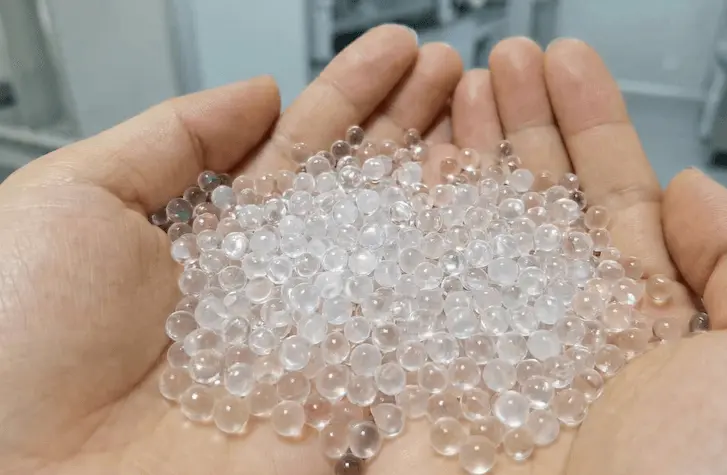
Finally, the irregularly shaped beads are screened through varied mesh sizes.
- 0.5–2mm: Often used for small sachets.
- 2–4mm: Common for bulk usage or breathers. Uniform size ensures consistent airflow and absorption rates during usage.
How Clay Desiccant is Processed
Unlike silica gel, Montmorillonite Clay is not synthesized; it is harvested. The production process here focuses on physical activation rather than chemical reaction.
Mining and Selection
It starts at the mine. Not all clay is created equal. We select raw Bentonite or Montmorillonite ore based on purity. High-quality ore has a specific layered structure that naturally traps water molecules. If the raw ore is poor, no amount of processing can fix it.
Drying and Activation
The raw ore contains moisture from the earth. To make it a desiccant, we must empty it. The clay acts like a dry sponge. We pass the raw material through a rotary kiln at high temperatures. This removes the bound water from the clay’s layers, creating a “thirsty” material ready to re-absorb moisture from your packaging.
Granulation
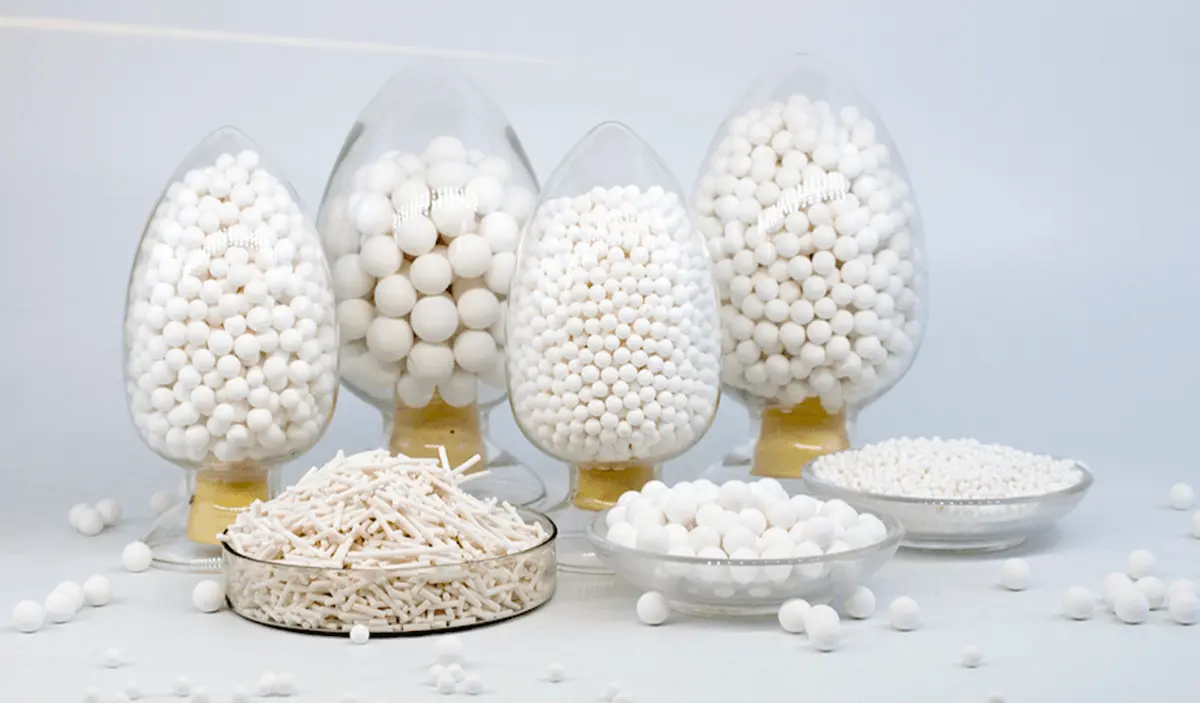
Once dried, the clay is crushed and sifted into irregular granules. Unlike the smooth beads of silica gel, clay granules have a rough texture, which actually increases the surface area for absorption.
Quick Comparison: Silica Gel vs. Clay Production
Feature | Silica Gel | Montmorillonite Clay |
Process Type | Chemical Synthesis | Physical Processing |
Key Input | Sodium Silicate + Acid | Raw Mineral Ore |
Energy Use | High (Chemical reaction + Heat) | Low (Mining + Heat) |
Cost Profile | Higher | Lower (Economical) |
Environmental | Synthetic | Natural / Biodegradable |
The Packaging Process to Ensure a Perfect Seal
Once we have the active ingredient (the absorbent), we must package it safely. A desiccant that leaks is worse than no desiccant at all.
Material Selection
We choose the packaging film based on the application.
- Tyvek is the gold standard. It allows moisture in (breathable) but prevents dust from getting out. It is tear-resistant.
- Non-Woven is economical and high strength.
- OPP/CPP is used for specific industrial applications where transparency is needed.
Filling and Sealing
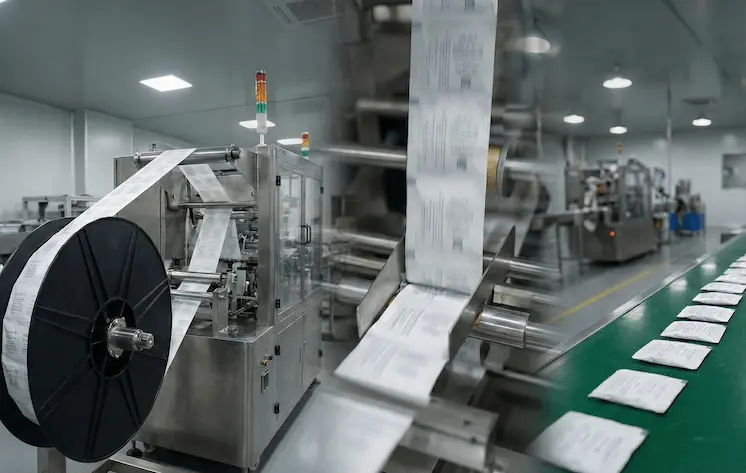
In modern factories, manual scooping is a thing of the past. We use high-speed automated packaging lines.
- Volumetric Cups: These measure the exact weight (e.g., 1g, 5g, 100g) for every packet.
- Sealing: This is where the magic happens. Whether using Heat Sealing or Ultrasonic Sealing, the machine bonds the edges of the packet.
- The “Three-Side” vs. “Back Seal”: We ensure the seal width is sufficient to withstand pressure. A weak seal leads to “bursting” during transit.
Printing and Customization
Simultaneously, the film is printed. This includes standard safety warnings (e.g., “DO NOT EAT”) and compliance symbols. This is also where we apply custom branding for clients who want their logo inside their customer’s unboxing experience.
Quality Control to Ensure Performance & Safety
Producing the sachet is not the end. Before a batch leaves the factory, it undergoes rigorous testing.
- Moisture Content Test
We test the desiccant right off the line to ensure it hasn’t absorbed moisture during the factory process. It must be “bone dry” (typically <2-5% moisture content depending on type) before packing.
- Adsorption Capacity Test
We place samples in a humidity chamber (e.g., at 40% RH and 80% RH) to verify they absorb the required percentage of their weight.
- Leakage/Strength Test
We apply pressure to the sachets to ensure the seals do not burst under the weight of goods in a shipping container.
- Compliance Check
Finally, we verify the batch is DMF Free (Dimethyl Fumarate) and complies with RoHS and REACH standards for international trade.
FAQs
How do you ensure the desiccant doesn't leak dust?
We use high-density packaging materials like Tyvek and coated non-woven fabrics. Additionally, our production lines use electronic dust removal systems before the sealing stage to keep the seal area clean.
Why is there a color difference in Clay desiccants?
Because it is a natural mineral! Just as stones in a river vary in color, Montmorillonite clay can range from grey to purple to tan. This is a sign of a natural product and does not affect performance.
Can you produce custom-sized sachets?
Yes. Since the process is automated, we can adjust the filling volume and bag length to create anything from a 0.5g micro-packet to a 2kg container pole bag.
Conclusion
A high-quality desiccant is the result of high-purity raw materials, precise processing, and robust packaging. It is not just a bag of sand. It is an engineered product designed to protect your brand’s reputation.
Whether you choose Silica Gel or Clay, the invisible steps in the manufacturing process determine whether your goods arrive dry or damaged.
Now you know what to look for.
Ready to upgrade your moisture protection?
Don’t guess about quality, see it for yourself.
Contact our team today to request a Free Sample Kit. You can test our absorption rates in your own lab and see the difference firsthand.