Introduction
If you’ve ever opened a container after a long voyage and found moldy garments, softened cartons, or rust spots on metal parts, you know that moisture damage isn’t just a quality issue. It affects customer trust, shipping schedules, and even long-term partnerships.
Choosing the right desiccant is one of the simplest ways to prevent that. The “best” desiccant depends on your packaging environment, not just absorption rate on paper.
In this guide, I’ll walk you through the practical differences we see on the ground, why certain materials behave differently, and how to select the right solution for your products and budget.
At a Glance: The Core Differences
Before diving deeper, here’s a quick side-by-side look. This reflects what we typically observe in real shipping and warehouse conditions.
Feature | Montmorillonite Clay | Silica Gel |
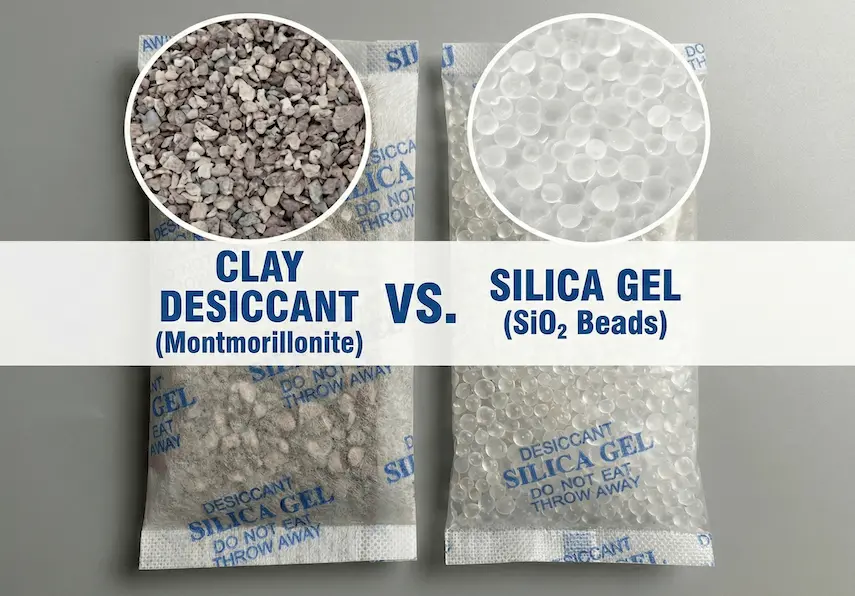
Primary Material | Natural Bentonite Clay | Synthetic Silicon Dioxide (SiO₂) |
Absorption Capacity | ~25% – 30% of its weight | ~30% – 40% of its weight |
Best RH Range | Low–moderate humidity (<50%) | Moderate–high humidity (40–70%) |
Temperature Stability | Can desorb above 50°C | Stable up to 150°C |
Cost Profile | Low | Medium–High |
Sustainability | Natural, biodegradable | Synthetic production |
Quick Verdict:
Use Clay when you need cost-effective, reliable moisture control for standard shipments.
Choose Silica Gel when your goods travel through hot climates or require stricter humidity control.
Analyze Performance Criteria
From our real-world experience, moisture problems rarely come from low absorption. They come from using the wrong material for the humidity and temperature conditions.
Here’s how each desiccant truly performs under stress.
Absorption Capacity
Clay absorbs around 25–30% of its weight. It’s enough for apparel, leather, general storage, and most inland shipments.
Silica Gel can push up to 30–40% thanks to its highly porous structure.
In our clients’ tests, silica gel always reacts faster when humidity spikes suddenly—for example, when boxes move from an air-conditioned warehouse into a humid loading bay.
Note: Calcium Chloride (>200% absorption) is a different category—used for container-level moisture, not inside small retail packs.
Relative Humidity (RH) Efficiency
This is where performance differences become very obvious.
- Clay is excellent for maintaining dryness in already controlled environments. For example, garment factories shipping dri-packed items see stable results with clay.
- Silica Gel shines when humidity fluctuates. When RH jumps above 50%, common during ocean freight through Southeast Asia, it pulls moisture aggressively and stabilizes the environment faster.
Many electronics exporters we work with have switched from clay to silica after noticing reduced corrosion during monsoon seasons.
Temperature Stability and Reversibility
This point often gets overlooked, but it’s one of the biggest contributors to moisture failure.
- Clay begins to lose effectiveness at high temperatures. Once the temperature crosses ~50°C, clay can start releasing moisture (desorption). Shipping containers easily reach 60–70°C sitting under direct sun.
- Silica Gel is heat-stable up to 150°C, making it far more reliable for long voyages and extreme climates.
If your shipment faces heat + humidity, silica gel is the safer call.
Cost Efficiency
Clay is the most economical desiccant on the market. It’s ideal for high-volume shipments. Silica Gel costs more, but the cost is justified for certain products, especially electronics, optics, or pharmaceuticals where failure is expensive.
The Science: How They Work
Understanding how each material holds moisture helps explain their strengths and weaknesses.
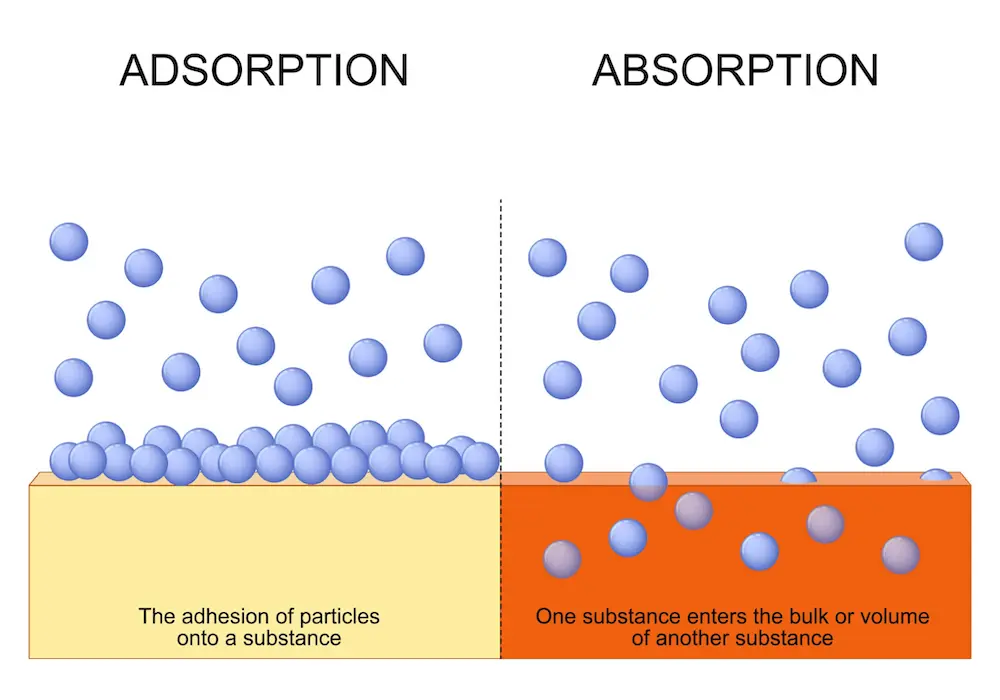
Montmorillonite Clay
A natural mineral with layered platelets that trap water molecules between them. Because this is a physical bond, excess heat can loosen the structure and release moisture again.
That’s why clay works beautifully indoors, but not always in sealed, heat-exposed containers.
Silica Gel
A synthetic, amorphous SiO₂ structure filled with millions of micro-pores. It behaves like a rigid, extremely fine sponge, the moisture gets pulled into the pores and held there firmly. Because the pore structure does not expand or collapse under heat, the moisture stays locked in.
In practice, this is why silica remains reliable even during temperature shocks.
Match the Desiccant to the Application
Electronics & Optics
Best: Silica Gel
Sensitive components need dust-free, inert materials. Silica Gel gives stable low RH without contamination risk.
Textiles, Leather & General Shipping
Best: Montmorillonite Clay
Bulk shipments, long voyages, and standard warehouse climates rarely require the premium performance of silica gel. Clay gives the best value per dollar.
Food Packaging
The right choice depends on texture.
- Clay: Ideal for spices or powders where you want to prevent caking but avoid over-drying.
- Silica Gel: Best for crispy snacks (jerky, seaweed) that require aggressive drying to maintain crunch.
Pharmaceuticals
Best: Silica Gel
Due to strict hygiene standards, Silica Gel is preferred. Being synthetically produced in controlled environments, it eliminates the variance and impurity risks associated with mined clay minerals.
Sustainability and Safety Profile
Many global brands now consider environmental impact when designing their packaging.
- Clay is the more sustainable choice, natural, minimally processed, and biodegradable.
- Silica Gel requires more energy to produce but offers higher performance where needed.
Both are non-toxic when using modern indicator options. Avoid blue silica gel (cobalt-based). Choose orange or non-indicating white for safe use in food and pharma applications.
When to Choose High-Performance Alternatives
Sometimes, standard protection isn’t enough. For extreme scenarios, consider these specialized solutions:
- Molecular Sieves: The choice for aggressive drying. If you need to drive Relative Humidity down to nearly 0% or require stability in temperatures exceeding 300°F, this is the industrial standard.
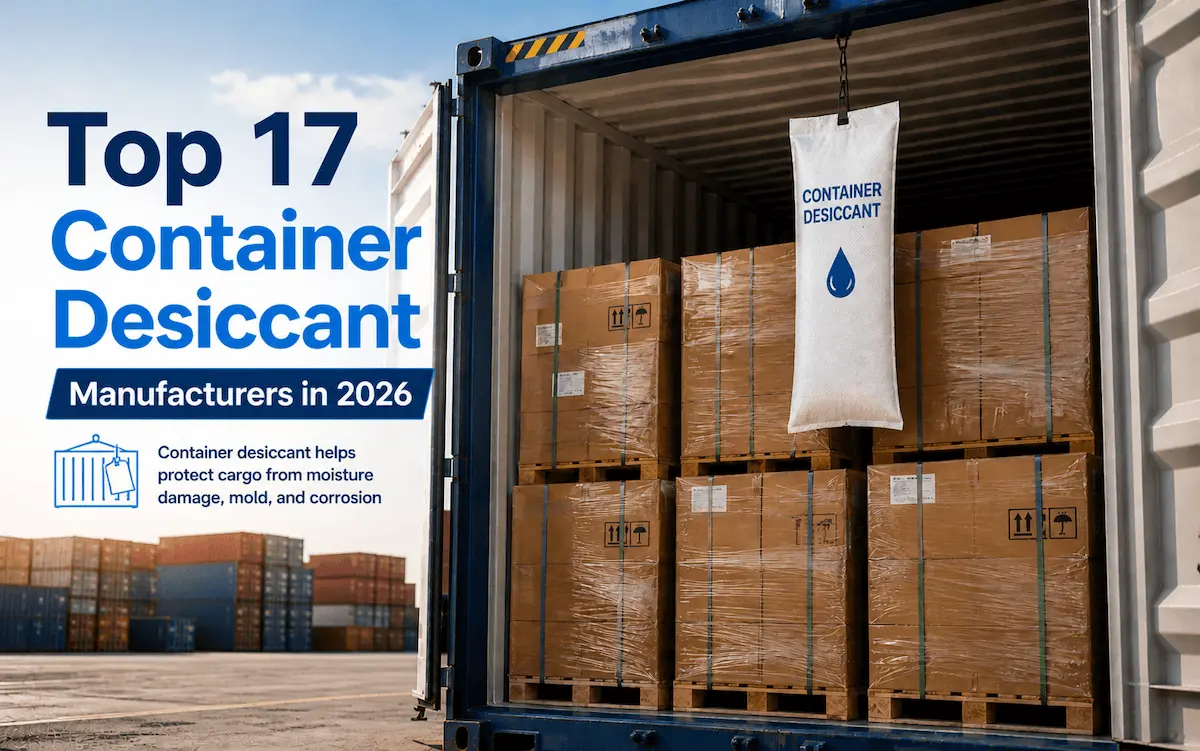
- Calcium Chloride: The heavy lifter for Container Rain. While clay and silica absorb ~30%, Calcium Chloride absorbs 300%+ of its weight. Note that it turns into a liquid or gel upon saturation, so it requires specialized leak-proof packaging (like hanging container poles) to prevent leakage.
FAQs on Clay Desiccant vs Silica Gel
- Is silica gel better than clay desiccant?
Not always. Silica performs better in high humidity and heat, while clay is cost-effective and eco-friendly for general uses.
- Can I reuse clay desiccants?
Not recommended. Clay degrades if heated too high. Silica gel can be regenerated by heating, making it reusable for consumer applications.
- What is the best desiccant for shipping containers?
For containers, Calcium Chloride is superior due to its massive absorption capacity (300%). However, for inside the boxes within the container, Clay is the standard cost-effective choice.
- Are clay desiccants food safe?
Yes, specific grades of Montmorillonite clay are FDA-approved for direct contact with food, particularly for dry goods like spices.
Ready to Protect Your Supply Chain?
Moisture failures don’t happen because your desiccant is bad.
They happen because the material doesn’t match your shipping environment.
If you want to test which desiccant works best for your exact packaging, contact our engineering team today for a free consultation and a customized sample kit to test with your specific packaging. We’ll help you choose the most reliable and cost-efficient solution.